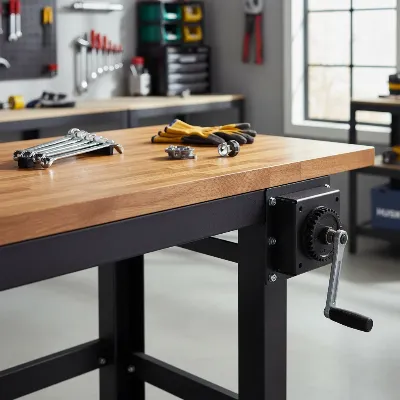
Ever feel like your garage is bursting at the seams, yet you still need a dedicated space for your projects? You’re not alone. Many DIY enthusiasts and professionals struggle with limited workspace, making the dream of a fully functional workshop seem out of reach. But what if you could have a robust, reliable workbench that fits perfectly without sacrificing an inch of precious garage real estate? The key lies in choosing a compact workbench designed to maximize efficiency in smaller footprints. This guide will help you navigate the world of compact workbenches, ensuring your small garage shop is not just functional, but a true haven for creativity and productivity.
What is a Compact Workbench and Why Do You Need One?
A compact workbench is a specialized work surface engineered to provide full functionality within confined spaces, such as small garage shops or home workshops. Unlike traditional, bulky benches, these designs prioritize portability, foldability, or intelligent use of vertical space. For anyone with limited square footage, a compact workbench isn’t just a convenience; it’s a necessity, transforming an otherwise cluttered area into an efficient workstation.
The benefits of integrating a compact workbench into your small garage are numerous. Primarily, it significantly increases productivity by offering a stable and dedicated area for tasks that might otherwise be performed on the floor or a makeshift surface. This dedicated space ensures tools and materials are organized and within reach, minimizing downtime. Furthermore, a proper workbench enhances safety by providing a secure platform for cutting, drilling, and assembly, reducing the risk of accidents compared to unstable alternatives. Finally, the convenience of a compact design means your workspace can adapt to your needs, whether you’re tackling a quick repair or a more involved build.
When considering a compact workbench, several factors come into play, including the available space, the types of projects you undertake, and your budget. The right choice will seamlessly integrate into your workflow, making your small garage feel much larger and more capable.
Popular Compact Workbench Types for Small Spaces
The market offers several types of compact workbenches, each with unique advantages tailored to specific needs and space constraints. Understanding these differences is crucial for selecting the perfect fit for your small garage shop.
Portable Workbenches
Portable workbenches are the champions of flexibility, designed for easy movement and quick setup.
- Advantages: Their primary benefit is effortless mobility, allowing you to reposition your workspace for better light, ventilation, or to make room for vehicles. Many models also fold flat for convenient storage, making them ideal for shared spaces or when your garage doubles as a parking spot. Some portable benches even offer built-in clamping systems and serve as a sawhorse.
- Disadvantages: While surprisingly stable for their size, portable workbenches generally offer less inherent stability and lower weight capacities compared to their stationary counterparts. This can be a concern for very heavy-duty tasks or projects requiring extreme precision.
- Applications: These benches are perfect for temporary projects, DIY repairs around the home, or for contractors who need a stable surface on various job sites. Brands like Worx Pegasus and Keter Folding Tables are popular examples in this category.
|
Our Picks for the Best Work Bench in 2026
As an Amazon Associate I earn from qualifying purchases.
|
||
| Num | Product | Action |
|---|---|---|
| 1 | Bench Solutions Heavy Duty Fold Down Work Bench. |

|
| 2 | Foldable Work Bench,Easy Step Protable Work Table,34" W x 25" D x 31" H Lightweight Workbench wih 1650 LBS,Work Benches for Garage,Work Bench Suitable for Garage,Workshop and Home (Green) |
|
| 3 | Seville Classics UltraHD 72" W X 25" D Wood Top Height Adjustable Workbench 2000 Lb Capacity |
|
| 4 | Express Folding Worktable, Easy Setup Portable Folding Workbench, 34" W x 24" D Lightweight Versatile Worktable with 1650 Lbs Load Capacity Work Benches for DIY Home Improvements Professional Worksite |
|
| 5 | POWERTEC Portable Small Workbench with Vise, Imprinted Ruler and Protractor Scale, Folding Sawhorse/Worktable and 4 Bench Dogs for Woodworking Projects (MT4006V) |
|
| 6 | Heavy Duty Workbench Bracket Kit - 8 Pcs Steel 3-Way Right Angle Corner Brackets for DIY Custom Workbench, Shelving, Work Table, Fits 2x4 (Actual 1.5"x3.5") Wood |
|
| 7 | BORA Centipede 30in Folding Work Table - 48 x 96 Portable Workbench with 6000lb Capacity, 15-Strut Collapsible Work Bench for Garage, Mobile Workstation with Storage Bag - No Assembly Required CK15S |
|
| 8 | Keter Folding Work Table, Portable Workbench w/ 12" Clamps for Garage/Wood Shop - Heavy-Duty and All-Weather for DIY Home Improvements and Worksites |
|
| 9 | Express Folding Work Table, Easy Setup Portable Folding Work Table & Portable Folding Workbench, 34" W x 25" D x 31" H Lightweight Versatile Clamping Worktable for Garage/Wood Shop (Black) |
|
| 10 | Heavyweight 2' x 4' DIY Workbench Kit with Heavy-Duty Plastic Brackets, Easy-Cut Build, Lumber Not Included, Gray |
|
Stationary Workbenches (Compact Designs)
Even within the stationary category, there are compact designs that provide robust stability without dominating your entire garage.
- Advantages: Offering superior stability and often higher weight capacities, compact stationary benches are built for demanding tasks like heavy hammering or metalwork. They can be anchored to a wall for maximum rigidity and often feature integrated storage solutions like drawers, shelves, or pegboards.
- Disadvantages: The main drawback is their lack of mobility. Once set up, they are difficult to move, which can be a limitation if your garage layout frequently changes or if you need to clear floor space regularly.
- Applications: These are best suited for those who have a dedicated corner in their small garage and require a consistently stable and durable work surface for woodworking, automotive repairs, or intricate assembly tasks.
Adjustable Height Workbenches (Compact Options)
Adjustable height workbenches combine versatility with ergonomic benefits, with compact models available for smaller shops.
- Advantages: The ability to customize the workbench height to suit different tasks or users is a significant advantage, promoting ergonomic posture and reducing fatigue during long working sessions. This feature is particularly beneficial for those who switch between standing and sitting work, or for accommodating various tools and project types.
- Disadvantages: Adjustable height mechanisms can add to the cost and complexity of the workbench. While stable, they might not offer the same absolute rigidity as a purely stationary, non-adjustable bench for extremely heavy-duty tasks.
- Applications: Ideal for professionals or serious hobbyists who prioritize comfort and adaptability, adjustable height compact workbenches fit well in small labs, offices, or multi-use garage spaces where different projects demand varying working heights. Husky and Kobalt offer popular adjustable height benches, some with compact options.
Comparison Table: Compact Workbench Types
To help you visualize the differences, here’s a quick comparison of these compact workbench types:
| Feature | Portable Work Bench | Stationary (Compact) Work Bench | Adjustable Height Work Bench (Compact) |
|---|---|---|---|
| Stability | Medium | High | Medium – High |
| Mobility | Very Easy | Difficult | Difficult |
| Space Footprint | Low (folds for storage) | Medium (fixed) | Medium (fixed) |
| Price Range | Low – Medium | Medium | Medium – High |
| Best For | Temporary work, light DIY | Dedicated tasks, heavy use | Ergonomics, varied tasks |
| Integrated Storage | Minimal, often tool holders | Good (drawers, shelves, pegboard) | Varies, can include drawers/shelves |
Buying Guide: Choosing the Right Compact Workbench
Selecting the perfect compact workbench involves a thoughtful assessment of your needs, the available space, and specific features. Don’t rush into a decision; a well-chosen workbench can enhance your productivity and enjoyment for years.
Determine Your Usage Needs
Before anything else, consider what you’ll primarily be using the workbench for.
- Project Type: Are you doing light crafting, intricate electronics, heavy woodworking, or automotive repairs? This will dictate the required stability, durability, and surface material.
- Frequency of Use: Will you use it daily, weekly, or just occasionally? Frequent use might justify a more robust and feature-rich model.
- Space Limitations: Carefully measure your available floor and wall space. Consider not just the bench’s footprint but also the clearance needed around it for working and tool access. Use painter’s tape on the floor to visualize the dimensions.
- Budget: Compact workbenches vary widely in price. Establish a realistic budget, remembering that investing in quality often pays off in durability and functionality.
Material and Durability
The materials used in a workbench significantly impact its lifespan, load capacity, and suitability for various tasks.
- Work Surface:
- Wood (e.g., butcher block, MDF): Excellent for absorbing vibrations, good for clamping, and easy to modify for vises. Hardwoods like maple are durable but can be more expensive. MDF is a cost-effective option for lighter tasks.
- Steel: Highly resistant to spills, scratches, and dents, making it ideal for heavy-duty work and dirty tasks. However, steel tops can be slippery and transmit vibrations.
- Plastic (heavy-duty ABS): Lightweight and portable, often found in folding workbenches. Suitable for light-to-medium jobs but less ideal for heavy impact or high heat.
- Frame:
- Steel: The strongest and most durable option for frames, capable of supporting heavy loads. Welded steel frames generally offer more stability than bolted ones.
- Aluminum: Lighter than steel, offering good portability while maintaining decent strength.
- Wood: Used in some traditional or DIY benches, offering good vibration dampening but potentially less overall load capacity than steel.
Always check the manufacturer’s specified weight capacity to ensure it meets your project requirements. Look for features like scratch-resistant finishes or chemical resistance if your work involves harsh substances.
Size and Design
Even with compact workbenches, size and design elements play a critical role in usability.
- Height: Standard workbench heights range from 32 to 36 inches, suitable for average adults standing. Adjustable height models offer the most ergonomic flexibility, allowing you to tailor the height to your specific needs and reducing strain.
- Surface Area: Ensure the tabletop is large enough to comfortably accommodate your typical projects and tools. Some compact benches can link together or expand to provide a larger surface when needed, then fold away.
- Storage Solutions: For small garages, integrated storage is invaluable. Look for models with built-in drawers, shelves, pegboards, or tool holders to keep your workspace organized and clutter-free. Some portable benches even include built-in clamps.
- Mobility: If you need to move your bench, casters (wheels) with locking mechanisms are essential. For ultimate portability, a folding design is key.
Brand and Reviews
Researching reputable brands and reading user reviews can provide valuable insights into a workbench’s real-world performance and durability. Brands like Worx, Keter, DeWalt, Husky, Kobalt, and Seville Classics are often mentioned for their quality compact and portable workbenches. Pay attention to common complaints or praises regarding stability, ease of assembly, and overall value.
> “In a small shop, every inch must earn its keep. A compact workbench isn’t just about fitting; it’s about intelligent design that multiplies your capabilities without demanding more space.” – John Smith, Small Shop Specialist
Top Compact Workbenches for Small Garage Shops
Finding the perfect compact workbench can significantly upgrade your small garage shop. Here are some of the top-rated options that combine space-saving design with robust performance, frequently lauded by users for their practicality and durability.
1. Worx Pegasus Multi-Function Work Table and Sawhorse
The Worx Pegasus is a highly popular choice for its incredible versatility and compact footprint. It functions as both a sturdy work table and a capable sawhorse.
- Pros: It folds flat for easy storage, includes two quick clamps and four bench dogs for securing workpieces, and can connect with other Pegasus tables to create a larger work surface. It’s surprisingly stable for a portable unit and has a decent weight capacity for most DIY tasks.
- Cons: The plastic top, while durable, might not be suitable for extremely heavy-impact tasks or prolonged exposure to certain chemicals. Its primary stability is for moderate work.
- Best For: Woodworking, general DIY, light assembly, and anyone needing a portable and flexible work surface that can be tucked away easily.
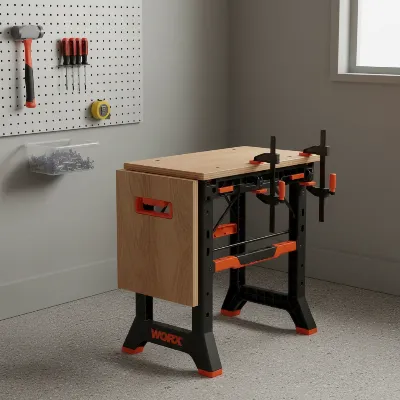 Worx Pegasus compact workbench in a small garage shop, folding flat for storage
2. Keter Folding Work Table
The Keter Folding Work Table is another strong contender for its excellent balance of portability and heavy-duty capacity.
- Pros: This workbench is lauded for its quick setup (often under 30 seconds) and impressive weight capacity, supporting up to 1,000 pounds. It’s constructed from durable resin and aluminum, making it weather-resistant and rugged. It also includes two clamps.
- Cons: While strong, its surface area might be smaller than some users prefer for very large projects.
- Best For: Those needing a highly durable, quick-deploying portable workbench for heavier tasks, even outdoors.
3. DeWalt Express Folding Workbench
Known for its robust construction, the DeWalt Express Folding Workbench offers a sturdy solution for on-the-go projects or small shops.
- Pros: It features a strong steel frame and a durable work surface, providing excellent stability for a portable unit. It’s designed for quick setup and breakdown, and its compact folded size makes storage simple. It also integrates clamp compatibility.
- Cons: It might be heavier than some other portable options, which could impact its ease of transport for some users.
- Best For: DIYers and professionals who need a reliable, stable portable workbench for demanding tasks and prefer the robust build of a recognized tool brand.
4. Husky Adjustable Height Workbench (46-inch compact models)
While Husky offers larger benches, their more compact adjustable-height models are excellent for small garage shops needing a stationary, yet ergonomic solution.
- Pros: These benches provide superior stability thanks to their steel frames and often a solid wood or butcher-block top. The adjustable height feature ensures ergonomic comfort for various tasks and users. They are designed for durability and heavy loads.
- Cons: They are not portable and require a dedicated space. The compact versions, while smaller than their full-size counterparts, still occupy a fixed footprint.
- Best For: Users seeking a permanent, highly stable, and customizable workstation in a smaller dedicated garage space, especially for detailed work or heavy-duty applications.
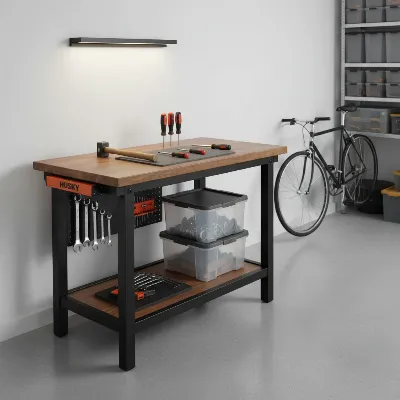 Husky adjustable height compact workbench in a small, tidy garage
Conclusion
The pursuit of an organized and efficient workspace doesn’t have to be a dream, even in the smallest garage shops. By carefully considering compact workbenches—whether they are portable, stationary, or adjustable—you can unlock significant potential within your limited footprint. These specialized solutions offer the stability, durability, and versatility needed to tackle a wide array of projects, transforming your garage into a productive hub. Remember, the best workbench is one that perfectly aligns with your specific needs, maximizing both your working space and your creative output. So, what kind of projects will you embark on once you’ve found your ideal compact workbench?
Frequently Asked Questions
What features should I prioritize for a compact workbench in a small garage?
For a small garage, prioritize features like foldability or portability for easy storage, integrated storage options (drawers, pegboards) to keep tools organized, and durable materials (steel frame, solid top) for stability. Adjustable height can also be a significant advantage for ergonomic working.
Are portable workbenches stable enough for heavy-duty tasks?
While generally less stable than fixed benches, many high-quality portable workbenches, like the Keter Folding Work Table, offer impressive stability and weight capacities (up to 1,000 pounds) suitable for heavy-duty tasks such as clamping, cutting, and light assembly. For extreme force or precision, a compact stationary bench might be more appropriate.
Can I add storage to a compact workbench that doesn’t have built-in options?
Absolutely. Many compact workbenches can be enhanced with aftermarket storage solutions. You can mount pegboards on nearby walls, add tool carts that roll under the bench, or attach magnetic tool holders. Some benches also allow for DIY modifications like adding small shelves underneath.
What is the ideal height for a compact workbench?
The ideal height depends on your height and the type of work you do. Generally, standing workbenches are 32 to 36 inches high. For maximum comfort and versatility in a small space, an adjustable height workbench is recommended, allowing you to customize the working surface to your specific needs and reduce strain during long projects.