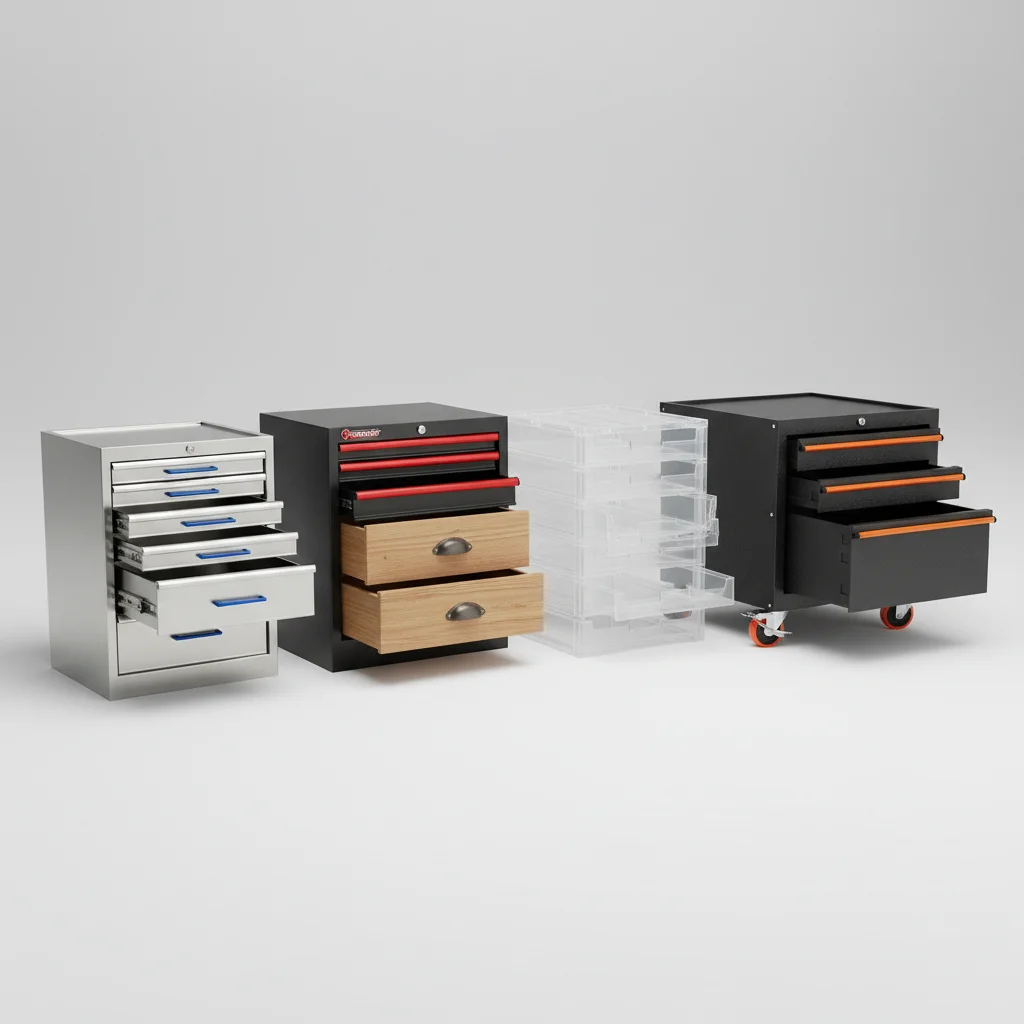
Adding workbench drawers is a highly effective way to organize tools and maximize workspace efficiency. There are five primary storage solutions for integrating drawers into your workbench setup, ranging from built-in units to modular systems. Each option offers distinct advantages in terms of capacity, accessibility, and ease of installation, catering to different workshop needs and budgets.
Integrated Workbench Drawer Systems
Integrated drawer systems are designed to be a permanent part of your workbench, often built directly into the frame or cabinet structure. These systems typically offer the most robust and seamless storage, providing deep and wide drawers capable of holding heavy tools. They are ideal for new workbench builds or significant upgrades where long-term, high-capacity storage is a priority. The construction often matches the workbench itself, ensuring a cohesive and durable unit. While they require more planning and potentially more complex installation, the result is a highly stable and efficient storage solution.
Modular Drawer Cabinets for Workbenches
Modular drawer cabinets offer flexibility, allowing you to add or reconfigure storage as your needs evolve. These standalone units can be placed under an existing workbench top, stacked, or even moved to different locations. They come in various sizes and configurations, often featuring ball-bearing slides for smooth operation and heavy-duty construction. This option is excellent for those who want to customize their storage without committing to a fully integrated build. Many modular units are designed to fit standard workbench dimensions, making them a popular choice for garage and workshop enthusiasts.
Under-Workbench Rolling Drawer Units
|
Our Picks for the Best Work Bench in 2026
As an Amazon Associate I earn from qualifying purchases.
|
||
| Num | Product | Action |
|---|---|---|
| 1 | Heavy Duty Workbench Bracket Kit - 8 Pcs Steel 3-Way Right Angle Corner Brackets for DIY Custom Workbench, Shelving, Work Table, Fits 2x4 (Actual 1.5"x3.5") Wood |

|
| 2 | POWERTEC Portable Small Workbench with Vise, Imprinted Ruler and Protractor Scale, Folding Sawhorse/Worktable and 4 Bench Dogs for Woodworking Projects (MT4006V) |
|
| 3 | Bench Solutions Heavy Duty Fold Down Work Bench. |
|
| 4 | BORA Centipede 30in Folding Work Table - 48 x 96 Portable Workbench with 6000lb Capacity, 15-Strut Collapsible Work Bench for Garage, Mobile Workstation with Storage Bag - No Assembly Required CK15S |
|
| 5 | Foldable Work Bench,Easy Step Protable Work Table,34" W x 25" D x 31" H Lightweight Workbench wih 1650 LBS,Work Benches for Garage,Work Bench Suitable for Garage,Workshop and Home (Green) |
|
| 6 | Express Folding Worktable, Easy Setup Portable Folding Workbench, 34" W x 24" D Lightweight Versatile Worktable with 1650 Lbs Load Capacity Work Benches for DIY Home Improvements Professional Worksite |
|
| 7 | Heavyweight 2' x 4' DIY Workbench Kit with Heavy-Duty Plastic Brackets, Easy-Cut Build, Lumber Not Included, Gray |
|
| 8 | Express Folding Work Table, Easy Setup Portable Folding Work Table & Portable Folding Workbench, 34" W x 25" D x 31" H Lightweight Versatile Clamping Worktable for Garage/Wood Shop (Black) |
|
| 9 | Keter Folding Work Table, Portable Workbench w/ 12" Clamps for Garage/Wood Shop - Heavy-Duty and All-Weather for DIY Home Improvements and Worksites |
|
| 10 | Seville Classics UltraHD 72" W X 25" D Wood Top Height Adjustable Workbench 2000 Lb Capacity |
|
Rolling drawer units provide the ultimate in mobility and convenience. These cabinets are equipped with casters, allowing them to be easily moved in and out from under a workbench, or even to different areas of the workshop. This is particularly useful for projects that require tools to be close at hand at various workstations. While they offer less permanent integration than built-in options, their portability is a significant advantage. Look for units with locking casters to ensure stability when in use. They are often made from steel or heavy-duty plastic, designed to withstand workshop environments.
DIY Workbench Drawer Solutions
For those with a knack for woodworking, building your own workbench drawers can be a rewarding and cost-effective solution. This approach allows for complete customization of drawer dimensions, materials, and internal organization. You can tailor each drawer to specific tools or supplies, ensuring every item has its designated place. Common materials include plywood, MDF, and solid wood, often paired with drawer slides purchased separately. While it requires time and skill, a DIY approach can result in highly personalized and efficient storage that perfectly fits your workbench and workflow.
Drawer Inserts and Organizers
Once you have your workbench drawers, optimizing their internal space is crucial. Drawer inserts and organizers, such as dividers, trays, and foam cutouts, help keep tools neatly arranged and prevent them from shifting during use. These accessories are available in various materials, including plastic, rubber, and foam, and can be customized to fit different drawer sizes. Effective internal organization not only makes tools easier to find but also protects them from damage. Consider using non-slip liners to further secure items within the drawers.
- Heavy-duty ball-bearing slides for smooth operation.
- Locking mechanisms for security and tool protection.
- Adjustable dividers for customizable internal organization.
- Robust construction materials like steel or thick plywood.
- Integrated power strips for charging tools within drawers.

I finally pulled the trigger on an integrated workbench drawer system, and it’s been a game-changer. My old setup was just a mess of tools on shelves, but now everything has its place. The deep drawers are perfect for my power tools, and the seamless look with my existing bench is fantastic. Definitely worth the investment for anyone serious about their workshop.
I tried out a budget-friendly option for adding drawers, specifically a standalone rolling cabinet that fits under my bench. While it does add some much-needed storage, the quality isn’t quite what I hoped for. The drawers can be a bit sticky when fully loaded, and it feels a little flimsy compared to the integrated systems. It works for now, but I might upgrade later.
My husband and I built a new workbench, and we made sure to include built-in drawers from the start. It’s amazing how much more efficient our workspace is now. We followed some of the advice here about maximizing capacity, and we can fit so many different tools without them getting jumbled. Highly recommend going this route if you’re doing a new build.
I went with one of the modular drawer systems mentioned, specifically the stackable kind. It was super easy to install under my existing workbench, which was a huge plus since I didn’t want to tear anything apart. The capacity is decent for my hand tools and smaller items, though I wish the slides were a little smoother on one of the units. Still, a big improvement for organization.