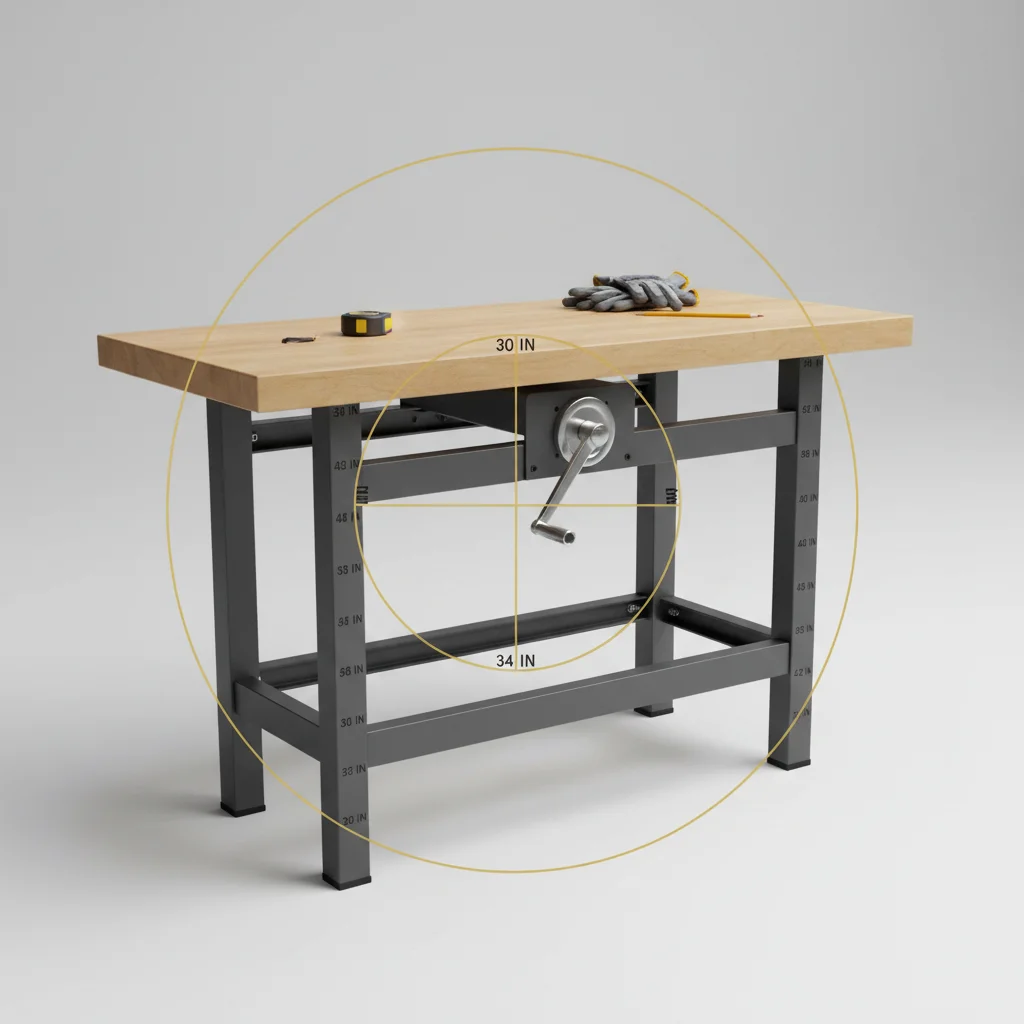
Determining the best workbench height for your garage is crucial for comfort, safety, and efficiency. The ideal height typically falls between 34 and 38 inches, but this can vary significantly based on your personal height, the type of work you’ll be doing, and whether you prefer to stand or sit. For most general tasks, a height that allows you to work with a slight bend in your elbows without stooping is optimal.
Understanding Ergonomics for Workbench Height
Ergonomics plays a vital role in preventing strain and injury during long work sessions. When standing, your workbench should be at a height where your hands can comfortably rest on the surface with your elbows bent at approximately a 90-degree angle. This minimizes stress on your back, shoulders, and neck. For precision work, a slightly higher surface might be beneficial, while tasks requiring significant downward force, like chiseling or heavy assembly, may benefit from a lower height to leverage body weight.
Consider the tools you’ll be using most frequently. If you often use power tools that require a stable, flat surface, ensure the height accommodates both the tool and your comfortable working posture. Adjustable height workbenches offer the most versatility, allowing you to customize the surface to different tasks and users.
Factors Influencing Your Ideal Workbench Height
Several factors contribute to finding your perfect workbench height. Your personal height is paramount; a taller individual will naturally require a higher workbench than someone shorter. As a general rule, stand upright and measure the distance from the floor to your wrist. This measurement often provides a good starting point for a comfortable standing workbench height.
The specific tasks you perform are equally important. For light assembly or intricate work, a higher bench can reduce eye strain and improve precision. For heavy-duty tasks like woodworking or metal fabrication, a slightly lower, more robust bench provides better leverage and stability. If you plan to use a workbench primarily for sitting, ensure there’s adequate legroom and that the surface is at a comfortable desk height.
- Your personal standing height and arm length.
- The primary types of tasks (e.g., precision, heavy assembly, light repair).
- Whether you primarily stand or sit while working.
- The height of any specific tools or equipment you’ll mount.
- Future flexibility needs (consider adjustable options).
Adjustable vs. Fixed Height Workbenches
|
Our Picks for the Best Work Bench in 2026
As an Amazon Associate I earn from qualifying purchases.
|
||
| Num | Product | Action |
|---|---|---|
| 1 | BORA Centipede 30in Folding Work Table - 48 x 96 Portable Workbench with 6000lb Capacity, 15-Strut Collapsible Work Bench for Garage, Mobile Workstation with Storage Bag - No Assembly Required CK15S |

|
| 2 | Heavy Duty Workbench Bracket Kit - 8 Pcs Steel 3-Way Right Angle Corner Brackets for DIY Custom Workbench, Shelving, Work Table, Fits 2x4 (Actual 1.5"x3.5") Wood |
|
| 3 | Express Folding Work Table, Easy Setup Portable Folding Work Table & Portable Folding Workbench, 34" W x 25" D x 31" H Lightweight Versatile Clamping Worktable for Garage/Wood Shop (Black) |
|
| 4 | Keter Folding Work Table, Portable Workbench w/ 12" Clamps for Garage/Wood Shop - Heavy-Duty and All-Weather for DIY Home Improvements and Worksites |
|
| 5 | Foldable Work Bench,Easy Step Protable Work Table,34" W x 25" D x 31" H Lightweight Workbench wih 1650 LBS,Work Benches for Garage,Work Bench Suitable for Garage,Workshop and Home (Green) |
|
| 6 | Heavyweight 2' x 4' DIY Workbench Kit with Heavy-Duty Plastic Brackets, Easy-Cut Build, Lumber Not Included, Gray |
|
| 7 | Bench Solutions Heavy Duty Fold Down Work Bench. |
|
| 8 | Express Folding Worktable, Easy Setup Portable Folding Workbench, 34" W x 24" D Lightweight Versatile Worktable with 1650 Lbs Load Capacity Work Benches for DIY Home Improvements Professional Worksite |
|
| 9 | POWERTEC Portable Small Workbench with Vise, Imprinted Ruler and Protractor Scale, Folding Sawhorse/Worktable and 4 Bench Dogs for Woodworking Projects (MT4006V) |
|
| 10 | Seville Classics UltraHD 72" W X 25" D Wood Top Height Adjustable Workbench 2000 Lb Capacity |
|
The choice between an adjustable and fixed-height workbench depends on your needs and budget. Fixed-height workbenches are generally more affordable and offer excellent stability, making them suitable if you have a consistent primary task and a known ideal height. However, they lack flexibility if your needs change or if multiple users with different heights will be using the bench.
Adjustable height workbenches, while often a larger investment, provide unparalleled versatility. They allow you to fine-tune the height for different tasks, switch between standing and sitting, and accommodate various users. This can significantly improve ergonomics and productivity over time. Look for models with easy-to-use adjustment mechanisms, such as crank handles or electric motors, for seamless transitions.
Optimizing Workbench Height for Specific Tasks
For woodworking, many professionals prefer a workbench height that is slightly below their elbow, allowing for good leverage when planing or chiseling. For intricate electronics or model building, a higher bench that brings the work closer to eye level can reduce strain. Mechanics often benefit from a sturdy, mid-height bench that can support heavy components and provide a comfortable working position for engine repairs or component assembly.
When planning your workbench, also consider the height of any storage solutions or tool racks you intend to install above or around it. Ensure that the overall layout promotes an efficient workflow and that frequently used tools are within easy reach without excessive bending or stretching. A well-planned workspace contributes significantly to both safety and productivity.
Final Considerations for Your Workbench Setup
Beyond just height, the overall stability and construction of your workbench are critical. A wobbly bench, regardless of its height, will hinder precision and can be unsafe. Ensure the workbench is level and securely anchored if necessary. Also, think about the surface material; different tasks may require different tops, such as a hard maple for woodworking or a steel top for metalworking.
Ultimately, the best workbench height is a personal choice that optimizes your comfort and efficiency. Take the time to measure, experiment, and consider your specific needs to create a workspace that supports your projects and well-being for years to come.
