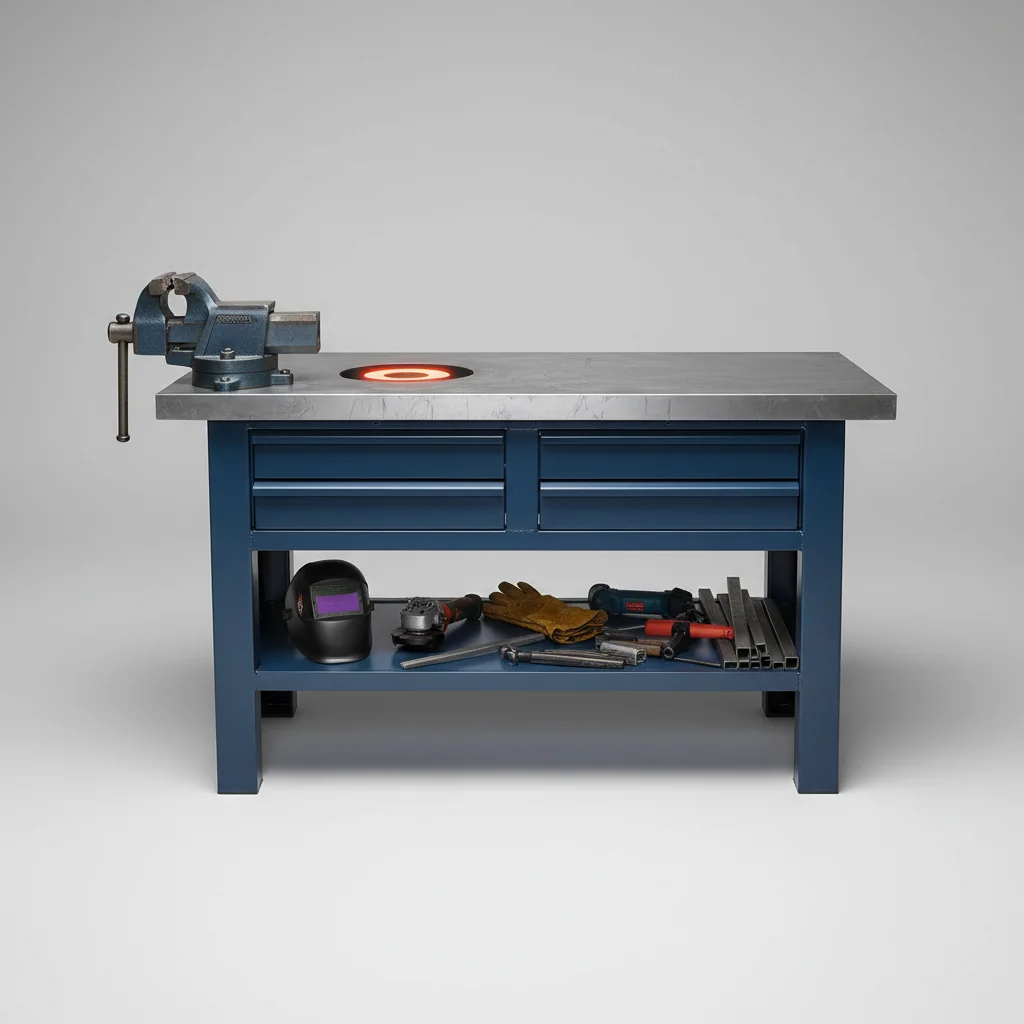
Choosing the best workbench for metal fabrication requires a focus on durability, stability, and specific features that support welding, grinding, and heavy-duty shaping. The ideal workbench will typically feature a heavy-gauge steel top, a robust frame, and often integrated or easily attachable vises and tool storage. For serious metalworkers, a minimum of 1/4-inch thick steel top is recommended to withstand the rigors of the craft without warping or damage.
Key Features of a Metal Fabrication Workbench
When selecting a workbench for metal fabrication, several key features stand out as essential. First and foremost is the material of the workbench top. Steel is the preferred choice due to its heat resistance and ability to withstand impacts from hammering and grinding. The thickness of the steel top is also critical; thinner tops can warp under heat or heavy loads, compromising your work surface. Look for tops that are at least 1/4-inch thick, with 1/2-inch or more being ideal for professional use.
Beyond the top, the frame’s construction is paramount. A heavy-duty steel frame, often with square tubing, provides the necessary stability to prevent wobbling during intense work. Adjustable leveling feet are a significant advantage, allowing you to compensate for uneven shop floors and ensure a perfectly stable surface for precision work.
Integrated Vises and Clamping Solutions
For metal fabrication, a robust vise is indispensable. Many specialized metal fabrication workbenches come with integrated vises or pre-drilled holes for easy mounting of heavy-duty vises. A swivel base vise is particularly useful, offering flexibility to position your workpiece at various angles. Additionally, the ability to easily clamp materials directly to the workbench surface is a major benefit. Some workbenches feature a grid of holes on the top, allowing for quick and secure clamping with various accessories.
- Heavy-duty steel top (1/4-inch minimum thickness)
- Robust, welded steel frame for maximum stability
- Integrated or easily mountable heavy-duty vise
- Ample weight capacity (typically 1,000 lbs or more)
- Adjustable leveling feet for uneven floors
Storage and Organization for Metalworking Tools
|
Our Picks for the Best Work Bench in 2026
As an Amazon Associate I earn from qualifying purchases.
|
||
| Num | Product | Action |
|---|---|---|
| 1 | Heavy Duty Workbench Bracket Kit - 8 Pcs Steel 3-Way Right Angle Corner Brackets for DIY Custom Workbench, Shelving, Work Table, Fits 2x4 (Actual 1.5"x3.5") Wood |

|
| 2 | Keter Folding Work Table, Portable Workbench w/ 12" Clamps for Garage/Wood Shop - Heavy-Duty and All-Weather for DIY Home Improvements and Worksites |
|
| 3 | Express Folding Worktable, Easy Setup Portable Folding Workbench, 34" W x 24" D Lightweight Versatile Worktable with 1650 Lbs Load Capacity Work Benches for DIY Home Improvements Professional Worksite |
|
| 4 | Heavyweight 2' x 4' DIY Workbench Kit with Heavy-Duty Plastic Brackets, Easy-Cut Build, Lumber Not Included, Gray |
|
| 5 | POWERTEC Portable Small Workbench with Vise, Imprinted Ruler and Protractor Scale, Folding Sawhorse/Worktable and 4 Bench Dogs for Woodworking Projects (MT4006V) |
|
| 6 | Foldable Work Bench,Easy Step Protable Work Table,34" W x 25" D x 31" H Lightweight Workbench wih 1650 LBS,Work Benches for Garage,Work Bench Suitable for Garage,Workshop and Home (Green) |
|
| 7 | Express Folding Work Table, Easy Setup Portable Folding Work Table & Portable Folding Workbench, 34" W x 25" D x 31" H Lightweight Versatile Clamping Worktable for Garage/Wood Shop (Black) |
|
| 8 | Seville Classics UltraHD 72" W X 25" D Wood Top Height Adjustable Workbench 2000 Lb Capacity |
|
| 9 | BORA Centipede 30in Folding Work Table - 48 x 96 Portable Workbench with 6000lb Capacity, 15-Strut Collapsible Work Bench for Garage, Mobile Workstation with Storage Bag - No Assembly Required CK15S |
|
| 10 | Bench Solutions Heavy Duty Fold Down Work Bench. |
|
Metal fabrication often involves a wide array of tools, from grinders and welders to hammers and measuring instruments. Adequate storage and organization are crucial for efficiency and safety. Many workbenches designed for metal fabrication include built-in drawers, shelves, or cabinets. These storage solutions should also be heavy-duty, capable of holding the weight of metalworking tools. Drawers with smooth-gliding ball-bearing slides are a plus, ensuring easy access even when loaded with heavy items.
Consider workbenches that offer modular storage options, allowing you to customize your setup as your tool collection grows. Pegboards or tool panels integrated into the workbench can also provide convenient access to frequently used hand tools.
Mobility vs. Stationary Workbenches
The decision between a mobile and a stationary workbench depends on your shop layout and workflow. For dedicated metal fabrication areas, a heavy, stationary workbench offers the ultimate stability and weight capacity. These are often bolted to the floor for maximum rigidity. However, if your workspace is multi-purpose or limited, a heavy-duty mobile workbench with robust casters can be a game-changer. Ensure that any mobile option has locking casters that can securely hold the workbench in place during use.
The casters themselves should be industrial-grade, capable of supporting the workbench’s weight plus the weight of your materials and tools. Polyurethane or cast iron casters are often preferred for their durability and load-bearing capacity.
Safety Considerations in Metal Fabrication
Safety is paramount in metal fabrication. Your workbench should contribute to a safe working environment. This includes a stable, non-slip surface, and a design that minimizes pinch points or sharp edges. If you plan to do a lot of welding, consider a workbench with a dedicated welding area or a top that can withstand high temperatures without damage. Proper grounding for electrical tools and welding equipment is also a critical consideration, and some workbenches may offer integrated grounding points.
Always ensure your workbench is rated for the weight you intend to place on it, and that it can withstand the forces generated by your fabrication processes.Investing in a high-quality metal fabrication workbench is an investment in both productivity and safety for your workshop.

I picked up a workbench that seemed good, but after reading about the importance of a robust frame, I realize mine might be a bit light-duty for serious work. It’s okay for lighter tasks, but when I’m really hammering on something, I notice a slight wobble. Wish I’d paid more attention to that detail before buying.
This guide was super helpful when I was looking for a new bench. I ended up getting one with a 1/4-inch thick steel top, and it’s been fantastic for my projects. It’s incredibly stable, even when I’m really leaning into some heavy shaping. My only minor complaint is that the integrated tool storage could be a bit more spacious, but that’s easily fixed with some add-ons.
As someone who does a lot of metal art, having a workbench that can withstand impacts is crucial. The steel top on my new bench is amazing; I don’t have to baby it at all. It’s made a huge difference in my workflow and confidence when working on larger, more aggressive pieces. Definitely worth the investment for the durability.
I finally upgraded my old wooden bench to a proper metal fabrication workbench, and it’s a game-changer. The heavy-gauge steel top mentioned in the post is absolutely essential. I do a lot of grinding and welding, and this thing handles the heat and sparks without any issues. No more worrying about burning through my work surface!