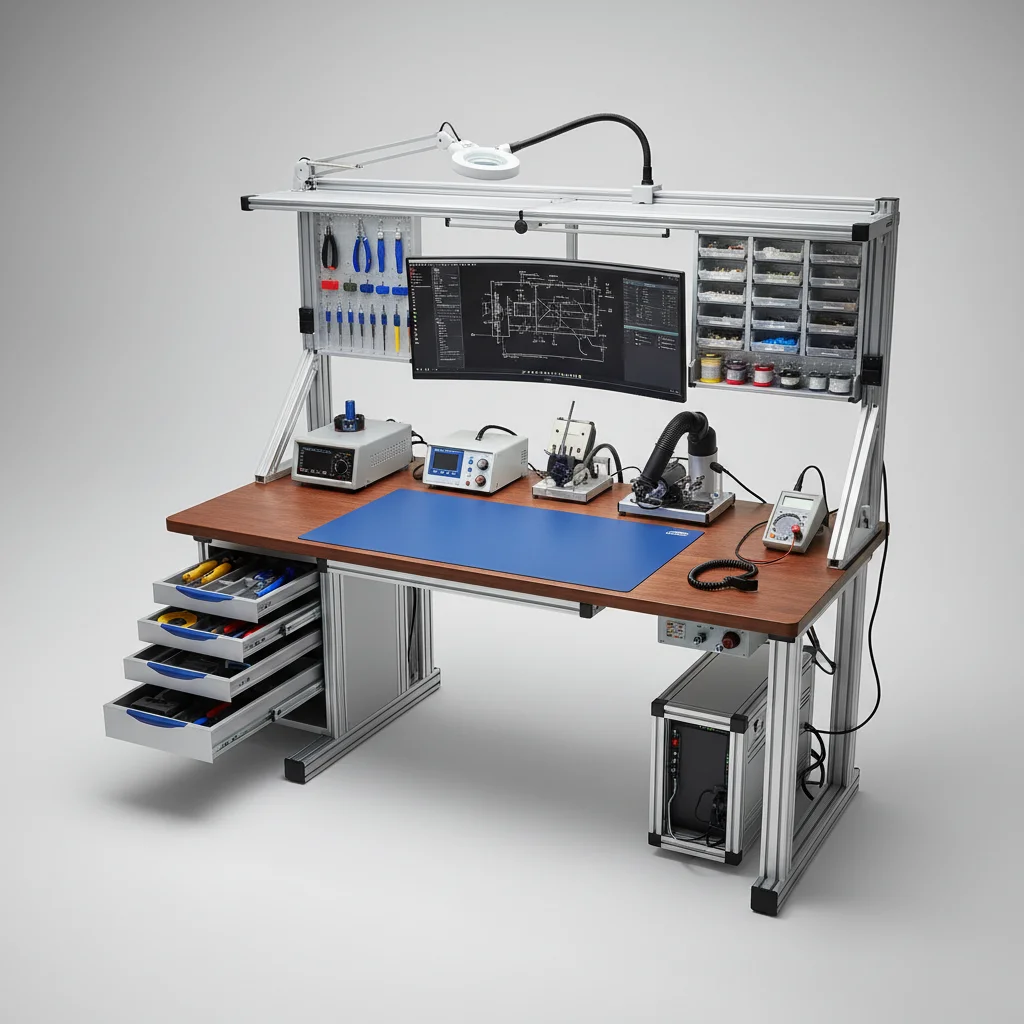
The best workbench for electronics repair combines stability, ESD protection, and ample organization. For serious hobbyists and professionals, a dedicated electronics workbench often features an ESD-safe surface, integrated power strips, and modular storage options to keep sensitive components and tools organized. This setup minimizes static discharge risks and maximizes efficiency for intricate work.
Essential Features for an Electronics Workbench
When selecting a workbench for electronics repair, several key features are non-negotiable. First, an ESD-safe surface is paramount to protect delicate components from static electricity. This often involves a dissipative mat and grounding wrist straps. Second, integrated power outlets are crucial for soldering irons, multimeters, and other test equipment, reducing cable clutter. Third, good lighting is essential for detailed work, often achieved with an adjustable task lamp.
Consider a workbench with a sturdy frame, preferably steel, to prevent wobbling during precise soldering or component placement. Adjustable height is also a significant advantage, allowing you to customize the working position for comfort and reduced fatigue during long repair sessions. Look for models that offer easy cable management solutions to keep your workspace tidy and safe.
ESD Protection: A Critical Component
Electrostatic Discharge (ESD) can permanently damage sensitive electronic components, often without visible signs. An effective electronics workbench incorporates several layers of ESD protection. The primary defense is an ESD-safe work surface, typically a mat made from dissipative material, which slowly drains static charges. This mat should be grounded to a common point ground (CPG) via a grounding cord.
In addition to the mat, a grounding wrist strap is vital. This strap connects the user to the same CPG, ensuring that both the technician and the components are at the same electrical potential. Some advanced workbenches may even include built-in ESD monitoring systems. Always ensure all tools and equipment used on the workbench are also ESD-safe or properly grounded.
Organization and Storage Solutions
|
Our Picks for the Best Work Bench in 2026
As an Amazon Associate I earn from qualifying purchases.
|
||
| Num | Product | Action |
|---|---|---|
| 1 | Heavy Duty Workbench Bracket Kit - 8 Pcs Steel 3-Way Right Angle Corner Brackets for DIY Custom Workbench, Shelving, Work Table, Fits 2x4 (Actual 1.5"x3.5") Wood |

|
| 2 | Express Folding Worktable, Easy Setup Portable Folding Workbench, 34" W x 24" D Lightweight Versatile Worktable with 1650 Lbs Load Capacity Work Benches for DIY Home Improvements Professional Worksite |
|
| 3 | BORA Centipede 30in Folding Work Table - 48 x 96 Portable Workbench with 6000lb Capacity, 15-Strut Collapsible Work Bench for Garage, Mobile Workstation with Storage Bag - No Assembly Required CK15S |
|
| 4 | Bench Solutions Heavy Duty Fold Down Work Bench. |
|
| 5 | POWERTEC Portable Small Workbench with Vise, Imprinted Ruler and Protractor Scale, Folding Sawhorse/Worktable and 4 Bench Dogs for Woodworking Projects (MT4006V) |
|
| 6 | Foldable Work Bench,Easy Step Protable Work Table,34" W x 25" D x 31" H Lightweight Workbench wih 1650 LBS,Work Benches for Garage,Work Bench Suitable for Garage,Workshop and Home (Green) |
|
| 7 | Express Folding Work Table, Easy Setup Portable Folding Work Table & Portable Folding Workbench, 34" W x 25" D x 31" H Lightweight Versatile Clamping Worktable for Garage/Wood Shop (Black) |
|
| 8 | Seville Classics UltraHD 72" W X 25" D Wood Top Height Adjustable Workbench 2000 Lb Capacity |
|
| 9 | Heavyweight 2' x 4' DIY Workbench Kit with Heavy-Duty Plastic Brackets, Easy-Cut Build, Lumber Not Included, Gray |
|
| 10 | Keter Folding Work Table, Portable Workbench w/ 12" Clamps for Garage/Wood Shop - Heavy-Duty and All-Weather for DIY Home Improvements and Worksites |
|
An organized workspace is critical for efficient electronics repair. The best workbenches for this purpose offer a variety of storage options. Drawers are excellent for small components, resistors, capacitors, and ICs, keeping them dust-free and categorized. Pegboards or tool panels allow for easy access to frequently used hand tools like screwdrivers, pliers, and wire strippers.
Shelving units, either integrated or modular, provide space for larger equipment such as oscilloscopes, power supplies, and logic analyzers. Some workbenches feature overhead lighting and power strips built into the shelving, further optimizing the layout. Consider transparent bins or small parts organizers to keep tiny components visible and accessible.
- ESD-safe mat and grounding kit
- Integrated power strip with multiple outlets
- Adjustable task lighting
- Multiple drawers for small components
- Pegboard or tool panel for hand tools
Top Workbench Models for Electronics Repair
Several manufacturers offer workbenches specifically designed or highly suitable for electronics repair. Brands like Lista, BenchPro, and Seville Classics provide robust options with various configurations. For a professional setup, a modular system from Lista allows for extensive customization, including ESD surfaces, integrated power, and a wide array of storage modules.
For hobbyists or those with a smaller budget, options from Seville Classics often include a durable steel frame, a wood or composite top, and sometimes integrated power and lighting. While these may not always come with an ESD surface, an aftermarket ESD mat can easily be added. Always check the weight capacity and stability to ensure it can support your equipment.
Setting Up Your Electronics Workbench
Once you have your workbench, proper setup is key. Position the workbench in an area with good ambient lighting and minimal foot traffic. Ensure easy access to power outlets for the workbench itself and any additional equipment. Arrange your tools and components logically, placing frequently used items within easy reach. Test all ESD grounding connections before beginning any work on sensitive electronics. A well-organized and properly grounded workbench will significantly enhance your repair capabilities and protect your valuable components.
