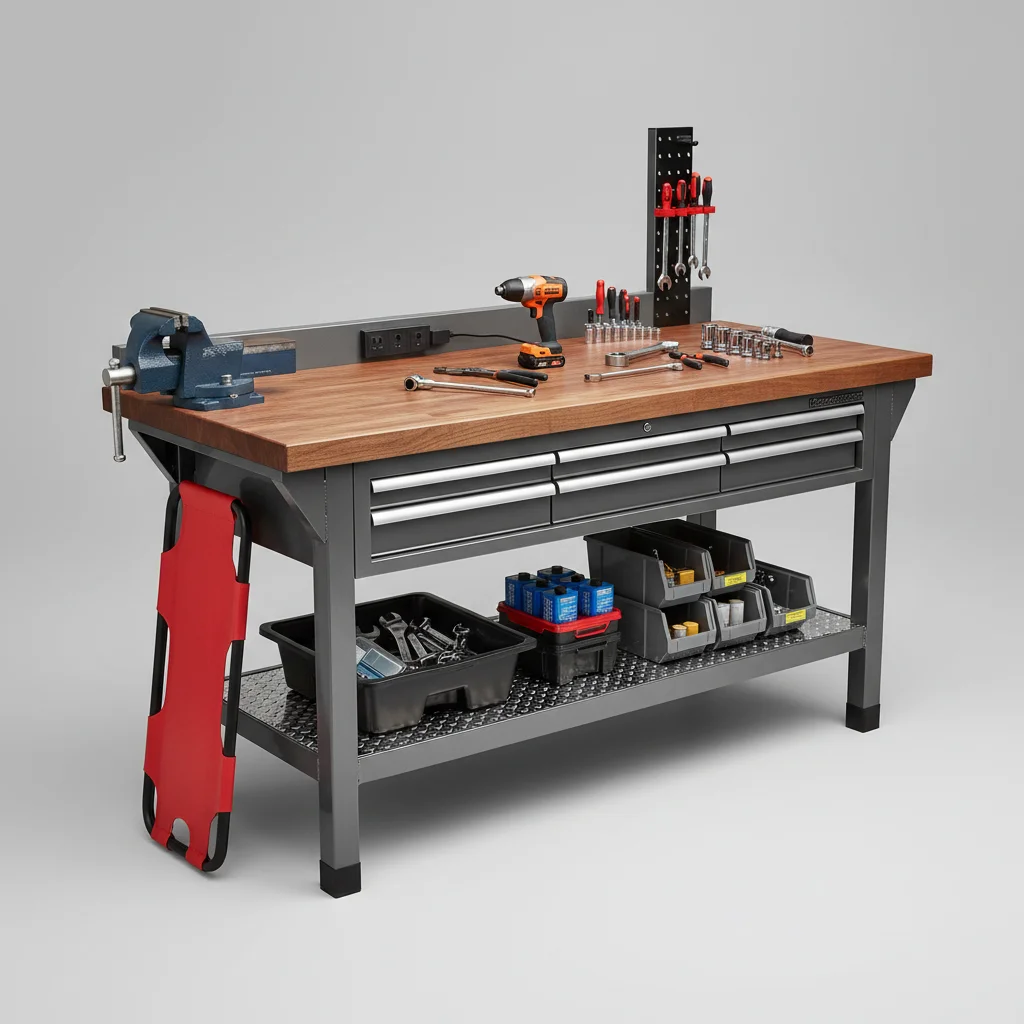
Choosing the best workbench for automotive repair is crucial for efficiency and safety in any garage. The ideal workbench for this demanding environment will feature a robust steel frame, a durable work surface like stainless steel or thick hardwood, and integrated storage solutions. These features ensure the bench can withstand heavy loads, resist spills, and keep tools organized and accessible during complex automotive tasks.
Key Features of an Automotive Workbench
An automotive workbench needs to be built to last. Look for models with heavy-gauge steel construction, which provides the necessary stability and strength to support engine components, transmissions, and heavy tools. The frame should be welded or bolted with high-quality fasteners to prevent wobbling under stress. Adjustable leveling feet are also a significant advantage, allowing you to stabilize the bench on uneven garage floors.
Durable Work Surface Materials
The work surface is arguably the most critical component of an automotive workbench. Stainless steel is an excellent choice due to its resistance to oil, grease, chemicals, and rust, making cleanup straightforward. Another strong contender is a thick, solid hardwood top, such as maple or oak, which offers excellent impact resistance and can be refinished if damaged. Avoid particleboard or thin laminate tops, as they will quickly degrade in a demanding automotive setting.
- Heavy-duty steel frame for maximum stability
- Chemical-resistant work surface (stainless steel or thick hardwood)
- Integrated storage, including drawers and shelves
- Adjustable height or leveling feet for uneven floors
- High weight capacity, typically over 1,000 pounds
Integrated Storage Solutions
|
Our Picks for the Best Work Bench in 2026
As an Amazon Associate I earn from qualifying purchases.
|
||
| Num | Product | Action |
|---|---|---|
| 1 | Bench Solutions Heavy Duty Fold Down Work Bench. |

|
| 2 | Foldable Work Bench,Easy Step Protable Work Table,34" W x 25" D x 31" H Lightweight Workbench wih 1650 LBS,Work Benches for Garage,Work Bench Suitable for Garage,Workshop and Home (Green) |
|
| 3 | Heavy Duty Workbench Bracket Kit - 8 Pcs Steel 3-Way Right Angle Corner Brackets for DIY Custom Workbench, Shelving, Work Table, Fits 2x4 (Actual 1.5"x3.5") Wood |
|
| 4 | BORA Centipede 30in Folding Work Table - 48 x 96 Portable Workbench with 6000lb Capacity, 15-Strut Collapsible Work Bench for Garage, Mobile Workstation with Storage Bag - No Assembly Required CK15S |
|
| 5 | Express Folding Worktable, Easy Setup Portable Folding Workbench, 34" W x 24" D Lightweight Versatile Worktable with 1650 Lbs Load Capacity Work Benches for DIY Home Improvements Professional Worksite |
|
| 6 | Heavyweight 2' x 4' DIY Workbench Kit with Heavy-Duty Plastic Brackets, Easy-Cut Build, Lumber Not Included, Gray |
|
| 7 | Keter Folding Work Table, Portable Workbench w/ 12" Clamps for Garage/Wood Shop - Heavy-Duty and All-Weather for DIY Home Improvements and Worksites |
|
| 8 | POWERTEC Portable Small Workbench with Vise, Imprinted Ruler and Protractor Scale, Folding Sawhorse/Worktable and 4 Bench Dogs for Woodworking Projects (MT4006V) |
|
| 9 | Express Folding Work Table, Easy Setup Portable Folding Work Table & Portable Folding Workbench, 34" W x 25" D x 31" H Lightweight Versatile Clamping Worktable for Garage/Wood Shop (Black) |
|
| 10 | Seville Classics UltraHD 72" W X 25" D Wood Top Height Adjustable Workbench 2000 Lb Capacity |
|
Effective organization is paramount in an automotive workshop. The best workbenches for automotive repair will incorporate ample storage, such as multiple drawers with smooth-gliding ball-bearing slides and sturdy shelves. These features help keep tools, parts, and supplies neatly organized and within reach, reducing downtime spent searching for items. Consider benches with lockable drawers for securing valuable tools.
Many automotive workbenches also include pegboards or integrated power strips, further enhancing their utility. A built-in power strip with multiple outlets is incredibly convenient for powering diagnostic tools, chargers, and lights without needing extension cords draped across the workspace.These thoughtful additions contribute significantly to a more productive and safer working environment.
Weight Capacity and Mobility
Given the heavy nature of automotive components, a high weight capacity is non-negotiable. A quality automotive workbench should comfortably support at least 1,000 pounds, with many heavy-duty models exceeding 2,000 pounds. While many automotive workbenches are stationary, some models offer heavy-duty casters for mobility. If mobility is a priority, ensure the casters are industrial-grade, lockable, and capable of handling the workbench’s full load capacity.
Ergonomics and Customization
Ergonomics play a role in long work sessions. Some automotive workbenches feature adjustable height settings, allowing you to customize the working surface to your preferred height, reducing strain during prolonged tasks. The ability to add accessories like vises, grinder mounts, or specialized tool holders can also significantly enhance the workbench’s functionality and adaptability to various automotive repair needs.

I was looking for something in the mid-range price point for my home garage. The workbench I got has a decent steel frame, but the work surface isn’t quite as durable as I’d hoped. It’s a composite material and already shows some scratches after just a few months of working on smaller engine parts. It’s okay for light tasks, but I might need to upgrade the top later.
I finally upgraded my old wobbly bench to a heavy-gauge steel model, and it’s made a world of difference for my car projects. The stability is incredible, even when I’m really leaning into something or using heavy impact tools. Having a solid surface that doesn’t flex under a transmission is a game-changer for safety and precision.
I picked up a workbench with a thick hardwood top and it’s been fantastic for general automotive work. It handles oil spills and minor impacts without issue, and it’s easy to clean. My only minor gripe is that I wish it came with more integrated storage options, but I was able to add some magnetic tool holders myself.
The adjustable leveling feet on my new workbench are a lifesaver. My garage floor is far from perfectly even, and being able to quickly stabilize the bench without shims is awesome. It makes such a difference when you’re trying to get precise measurements or just need a rock-solid surface for engine tear-downs.