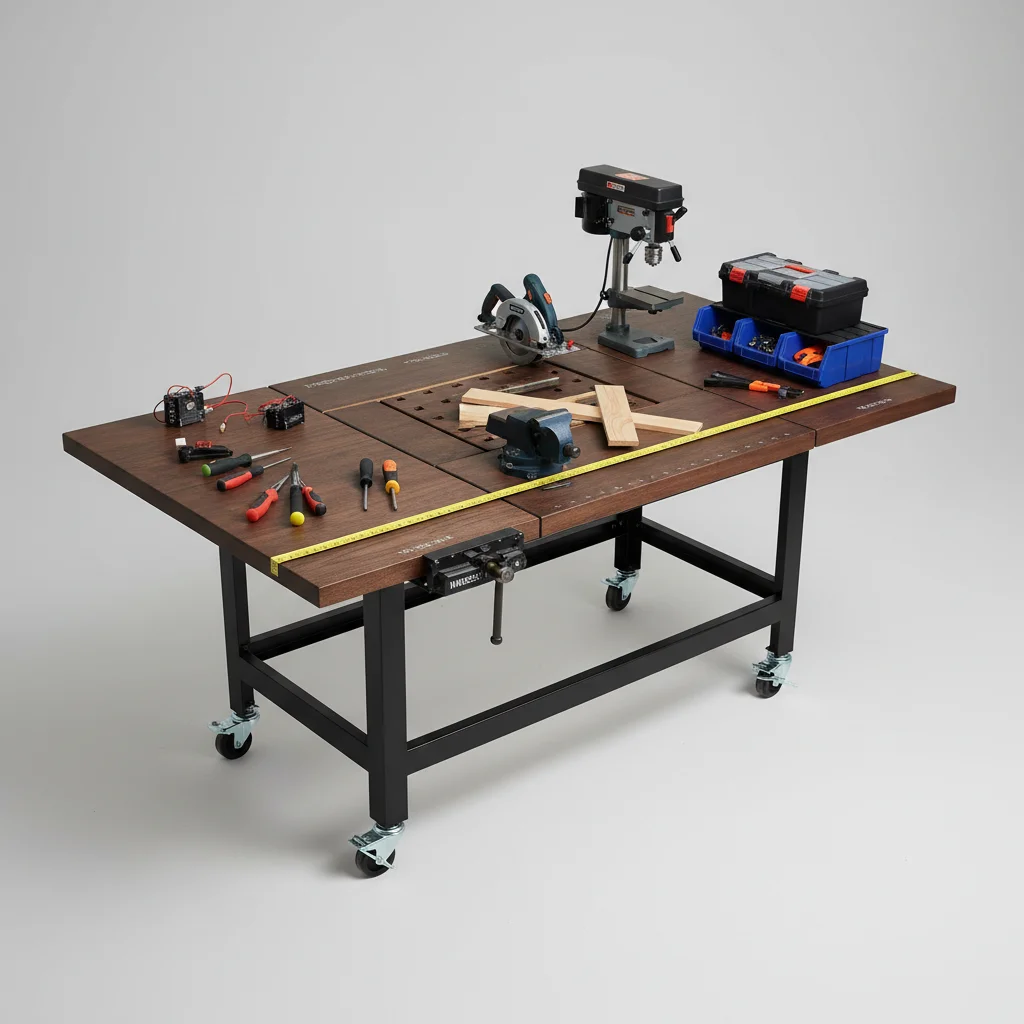
The best workbench depth for your garage typically falls between 24 and 30 inches. This range offers a practical balance between sufficient workspace for most projects and efficient use of garage real estate, allowing for comfortable movement and storage. Choosing the right depth depends on the types of tasks you’ll perform, the tools you’ll use, and the overall dimensions of your garage.
Understanding Standard Workbench Depths
Most commercially available workbenches adhere to standard depths, usually ranging from 20 to 36 inches. A 24-inch depth is a popular choice for general-purpose use, providing enough surface for smaller projects like electronics repair, light assembly, or crafting. It’s also ideal for garages where space is at a premium, as it minimizes intrusion into the walking path or parking area. For expert garage reviews on this site.
For more demanding tasks, a 30-inch depth offers a significant increase in usable surface area. This extra space is beneficial for woodworking, automotive repairs, or any project requiring larger tools or components. It allows for better organization of tools and materials on the benchtop, reducing clutter and improving workflow. However, it does require more floor space and might feel too deep in a very narrow garage.
Factors Influencing Your Workbench Depth Choice
Several key factors should guide your decision on workbench depth. First, consider the primary activities you’ll undertake. If you’re primarily using hand tools and working on small items, a shallower depth might suffice. For power tools, larger workpieces, or tasks that generate a lot of sawdust or debris, a deeper bench provides more containment and stability.
Second, evaluate the available space in your garage. Measure the area where the workbench will be placed, taking into account vehicle parking, existing shelving, and pedestrian traffic. Ensure there’s enough clearance to comfortably stand and work, and to open car doors or access other storage. A workbench that’s too deep can quickly make a garage feel cramped and dysfunctional.
- Project Type: Small crafts vs. large woodworking.
- Tool Size: Hand tools vs. power tools.
- Garage Dimensions: Overall width and depth.
- Storage Needs: Space for tools and materials.
- User Comfort: Ergonomics for standing and reaching.
Ergonomics and Accessibility
|
Our Picks for the Best Work Bench in 2026
As an Amazon Associate I earn from qualifying purchases.
|
||
| Num | Product | Action |
|---|---|---|
| 1 | Express Folding Work Table, Easy Setup Portable Folding Work Table & Portable Folding Workbench, 34" W x 25" D x 31" H Lightweight Versatile Clamping Worktable for Garage/Wood Shop (Black) |

|
| 2 | BORA Centipede 30in Folding Work Table - 48 x 96 Portable Workbench with 6000lb Capacity, 15-Strut Collapsible Work Bench for Garage, Mobile Workstation with Storage Bag - No Assembly Required CK15S |
|
| 3 | POWERTEC Portable Small Workbench with Vise, Imprinted Ruler and Protractor Scale, Folding Sawhorse/Worktable and 4 Bench Dogs for Woodworking Projects (MT4006V) |
|
| 4 | Heavy Duty Workbench Bracket Kit - 8 Pcs Steel 3-Way Right Angle Corner Brackets for DIY Custom Workbench, Shelving, Work Table, Fits 2x4 (Actual 1.5"x3.5") Wood |
|
| 5 | Seville Classics UltraHD 72" W X 25" D Wood Top Height Adjustable Workbench 2000 Lb Capacity |
|
| 6 | Foldable Work Bench,Easy Step Protable Work Table,34" W x 25" D x 31" H Lightweight Workbench wih 1650 LBS,Work Benches for Garage,Work Bench Suitable for Garage,Workshop and Home (Green) |
|
| 7 | Heavyweight 2' x 4' DIY Workbench Kit with Heavy-Duty Plastic Brackets, Easy-Cut Build, Lumber Not Included, Gray |
|
| 8 | Express Folding Worktable, Easy Setup Portable Folding Workbench, 34" W x 24" D Lightweight Versatile Worktable with 1650 Lbs Load Capacity Work Benches for DIY Home Improvements Professional Worksite |
|
| 9 | Bench Solutions Heavy Duty Fold Down Work Bench. |
|
| 10 | Keter Folding Work Table, Portable Workbench w/ 12" Clamps for Garage/Wood Shop - Heavy-Duty and All-Weather for DIY Home Improvements and Worksites |
|
Ergonomics play a crucial role in selecting the right workbench depth. A depth that’s too shallow might force you to lean over excessively, leading to back strain. Conversely, a bench that’s too deep can make it difficult to reach items at the back, requiring you to stretch or move around the bench frequently. The ideal depth allows you to comfortably reach all areas of the workbench surface without undue strain.
Consider your own height and arm reach. For most adults, a 24-30 inch depth strikes a good balance. If you plan to work with others, or if multiple people will use the workbench, a slightly deeper bench might be more accommodating. Remember that accessibility to outlets, lighting, and storage above or below the bench should also factor into your depth decision.
Specialized Workbench Depths
While 24-30 inches covers most general-purpose needs, some specialized applications might benefit from different depths. For precision work, such as jewelry making or electronics, a shallower depth (18-20 inches) can bring the work closer to you, improving visibility and control. These benches often prioritize a compact footprint.
On the other hand, heavy-duty industrial or automotive workbenches can extend to 36 inches or even deeper. This extra depth provides immense surface area for large engines, machinery, or multiple simultaneous projects. However, these are typically found in dedicated workshops rather than home garages due to their size and weight. Always match the depth to the specific demands of your most frequent tasks.
