A garage workbench that slides or shifts during use can be stabilized effectively using several DIY solutions, including increasing friction with rubber feet, adding weight to a lower shelf, or physically anchoring it to a wall or floor. A stable workbench is crucial for safety, precision, and efficiency in any DIY project, preventing tools from slipping and improving measurement accuracy. Addressing movement doesn’t always require a complete overhaul; many quick fixes can dramatically improve stability.
What Makes a Workbench Slide? And Why Stability Matters
A workbench primarily slides due to insufficient friction between its feet and the garage floor, or because it lacks enough mass to resist forces applied during work. Uneven flooring can also contribute by allowing the bench to rock, reducing consistent contact and promoting movement. Poor construction with flimsy joints can lead to overall instability and racking, which translates into perceived sliding.
The importance of a stable workbench cannot be overstated. From a safety perspective, a moving workbench can cause tools to slip, leading to injuries. For precision work, even slight movement can throw off measurements, angles, and cuts, ruining projects and wasting materials. In terms of efficiency, constantly having to re-position your bench or fight against its movement is a significant time-waster and source of frustration. A solid, immovable foundation allows for confident and accurate work, making every project more enjoyable and successful. For garage buying guides on this site.
Common Types of Workbench Stability Issues
Understanding the different ways a workbench can be unstable helps in choosing the right solution. While often used interchangeably, “sliding,” “rocking,” and “wobbling” describe distinct stability problems.
Sliding is the most direct issue this guide addresses, where the entire workbench moves across the floor, often under horizontal force. This is common during tasks like hand planing, aggressive sanding, or using chisels. It typically occurs when the friction between the workbench legs and the floor is insufficient to counteract the applied force.
Rocking or Wobbling refers to vertical instability. This happens when the workbench legs are not all in firm contact with the floor, usually due to uneven flooring or poorly cut legs. A rocking bench can pivot on one or two legs, making it feel unstable and often leading to sliding as consistent floor contact is lost.
Racking describes the side-to-side or front-to-back twisting and flexing of the workbench frame. This often points to weak joints, inadequate bracing, or a generally lightweight construction that lacks rigidity. Even if the feet don’t slide, a racking bench can still compromise accuracy and feel unstable, and prolonged racking can eventually loosen joints further, exacerbating other stability issues.
Fast DIY Solutions to Prevent Workbench Sliding
Achieving a rock-solid workbench doesn’t have to be complicated or expensive. Many effective solutions can be implemented quickly with common materials. The key is often to combine methods for optimal results.
1. Increase Friction Underneath the Legs
|
Our Picks for the Best Work Bench in 2026
As an Amazon Associate I earn from qualifying purchases.
|
||
| Num | Product | Action |
|---|---|---|
| 1 | Seville Classics UltraHD 72" W X 25" D Wood Top Height Adjustable Workbench 2000 Lb Capacity |

|
| 2 | BORA Centipede 30in Folding Work Table - 48 x 96 Portable Workbench with 6000lb Capacity, 15-Strut Collapsible Work Bench for Garage, Mobile Workstation with Storage Bag - No Assembly Required CK15S |
|
| 3 | Bench Solutions Heavy Duty Fold Down Work Bench. |
|
| 4 | Heavy Duty Workbench Bracket Kit - 8 Pcs Steel 3-Way Right Angle Corner Brackets for DIY Custom Workbench, Shelving, Work Table, Fits 2x4 (Actual 1.5"x3.5") Wood |
|
| 5 | Express Folding Work Table, Easy Setup Portable Folding Work Table & Portable Folding Workbench, 34" W x 25" D x 31" H Lightweight Versatile Clamping Worktable for Garage/Wood Shop (Black) |
|
| 6 | Heavyweight 2' x 4' DIY Workbench Kit with Heavy-Duty Plastic Brackets, Easy-Cut Build, Lumber Not Included, Gray |
|
| 7 | POWERTEC Portable Small Workbench with Vise, Imprinted Ruler and Protractor Scale, Folding Sawhorse/Worktable and 4 Bench Dogs for Woodworking Projects (MT4006V) |
|
| 8 | Keter Folding Work Table, Portable Workbench w/ 12" Clamps for Garage/Wood Shop - Heavy-Duty and All-Weather for DIY Home Improvements and Worksites |
|
| 9 | Foldable Work Bench,Easy Step Protable Work Table,34" W x 25" D x 31" H Lightweight Workbench wih 1650 LBS,Work Benches for Garage,Work Bench Suitable for Garage,Workshop and Home (Green) |
|
| 10 | Express Folding Worktable, Easy Setup Portable Folding Workbench, 34" W x 24" D Lightweight Versatile Worktable with 1650 Lbs Load Capacity Work Benches for DIY Home Improvements Professional Worksite |
|
One of the most immediate ways to combat sliding is to enhance the friction between your workbench legs and the floor.
- Rubber Feet/Pads: Attaching rubber feet or pads to the bottom of each leg is a highly effective and simple solution. You can purchase purpose-made rubber furniture feet, or for a fast DIY approach, cut pieces from old rubber mats, conveyor belts, or even thick silicone trivets often found in kitchen stores. These materials significantly increase the coefficient of friction against smooth garage floors. Ensure the pads are securely attached, either with adhesive or screws, to prevent them from slipping off the legs themselves. Pros: Inexpensive, easy to install, very effective on most hard surfaces. Cons: May wear down over time, less effective on extremely rough or oily floors.
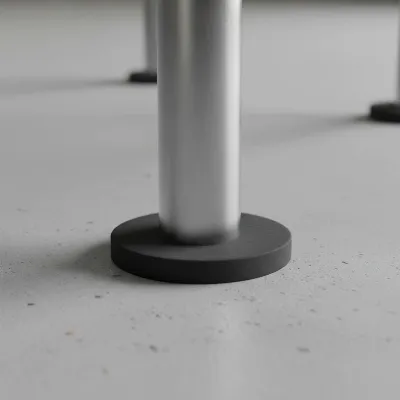 Workbench legs with DIY rubber feet preventing sliding on a garage floor
- Anti-Slip Mats: For a larger contact area, placing anti-slip mats under the entire workbench, or even just under the legs, can work wonders. Options include carpet padding, non-slip rug pads, or commercial anti-fatigue mats. These materials provide excellent grip and can also offer some cushioning, which might be beneficial if you’re standing at the bench for long periods. Pros: Large surface area for grip, versatile for various bench sizes. Cons: May compress or shift slightly over very long periods of heavy use, potentially requiring replacement.
2. Add Weight to the Workbench
Increasing the overall mass of your workbench is a straightforward way to make it more resistant to movement. Heavier objects require more force to initiate sliding, making your bench more stable during vigorous tasks.
- Lower Shelf with Weights: If your workbench has a lower shelf, utilize it! Placing heavy items like sandbags, tube sand (often used for vehicle traction), concrete blocks, or even large buckets of gravel or scrap metal can dramatically increase the bench’s stability. For a DIY touch, build a simple lower shelf from 2x4s if your bench lacks one; this can be done quickly and affordably. Pros: Highly effective, flexible (you can add or remove weight as needed), and relatively inexpensive. Cons: Takes up valuable storage space on the shelf, may increase the effort required to move the bench if mobility is occasionally needed.
- Heavier Workbench Top: For a more permanent solution, consider reinforcing your workbench top by gluing and screwing an additional layer of thick plywood or heavy solid wood boards to the underside. This adds significant mass directly where most of the work happens, improving overall rigidity and reducing sliding. While not a “fast” DIY in the sense of a five-minute fix, it’s a solid upgrade that can be done in an afternoon. Pros: Permanent, significantly improves overall stability and rigidity. Cons: Requires more involved modification, adds weight to the top, which might be undesirable if the bench needs to be disassembled.
3. Secure the Workbench to the Floor or Wall
For ultimate stability, especially if your workbench is stationary, physically anchoring it to the floor or a wall is the most secure option.
- L-Brackets: Using L-brackets to fasten your workbench legs directly to the concrete floor or to the studs in an adjacent wall provides unparalleled stability. If attaching to concrete, you’ll need a hammer drill and appropriate concrete anchors. For wall attachment, locate wall studs for maximum security. This method effectively eliminates sliding and rocking. Pros: Extremely secure, prevents virtually all movement. Cons: Permanent attachment (especially to the floor), limits workbench mobility, requires specific tools for concrete.
- Bracing Against a Wall/Solid Object: A less permanent but still effective method is to brace your workbench against a solid wall or a heavy, immovable object. A simple piece of 2×4 lumber can be cut to fit snugly between a workbench leg and a wall stud, acting as a brace. This works particularly well for benches that frequently experience force in one primary direction, like during hand planing. Pros: Simple, very low cost, effective for temporary stability. Cons: Relies on the integrity of the wall or external object, not always feasible in the middle of a garage.
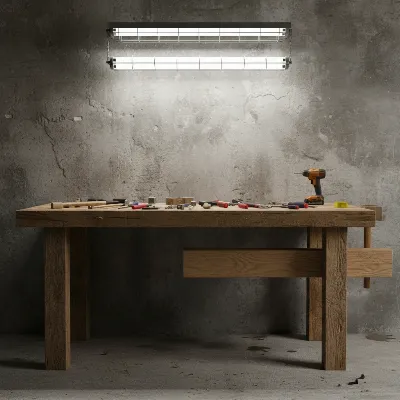 Garage workbench braced against a concrete wall with a wooden block
- Locking Casters/Wheels: For mobile workbenches, the quality and effectiveness of the locking casters are crucial. Ensure your casters are heavy-duty and equipped with reliable locking mechanisms that prevent both wheel rotation and swiveling. Even good casters can fail if they are not fully engaged. Inspect them regularly for wear and tear. Pros: Maintains workbench mobility while allowing for temporary stability. Cons: Only applicable to benches with wheels, effectiveness depends entirely on caster quality and maintenance.
4. Improve Workbench Structure and Leveling
Sometimes, sliding is a symptom of deeper structural issues or an uneven foundation. Addressing these can indirectly contribute to preventing unwanted movement.
- Adjustable Leveling Feet: If your garage floor is uneven, leading to a wobbly or rocking workbench, installing adjustable leveling feet on each leg is a simple fix. These threaded feet allow you to independently adjust the height of each leg, ensuring all four (or more) make firm contact with the floor. By eliminating rocking, you prevent the bench from losing consistent friction with the ground, which can otherwise initiate sliding. Pros: Eliminates rocking, fine-tunes stability on uneven surfaces. Cons: Primarily addresses rocking; while it helps prevent sliding, it might not be enough on its own for very high-force tasks.
- Strengthen Joints: While not a “fast” DIY fix for an existing, poorly built bench, good joinery is foundational for stability. For those building a new workbench or considering a significant upgrade, strong joints like mortise and tenon, dovetails, or robust dado joints, along with cross braces and heavy-duty fasteners (bolts with large washers, rather than just screws), will prevent racking. A bench that doesn’t rack will be less prone to shifting and sliding.
Comparison of Workbench Anti-Sliding Methods
Choosing the right method often depends on your workbench’s specific issues, your budget, and how often you need to move the bench. Here’s a quick comparison to help you decide:
| Method | Effectiveness (Sliding Prevention) | DIY Difficulty | Cost | Mobility Impact | Key Considerations |
|---|---|---|---|---|---|
| Rubber Feet/Pads | High | Easy | Low | Low | Excellent for smooth floors; may need periodic replacement. |
| Added Weight (Sandbags) | High | Easy | Low | Low-Medium | Requires a lower shelf; can be adjusted as needed. |
| L-Brackets (Floor/Wall) | Very High | Medium | Low | High (Fixed) | Most secure; requires drilling into floor/wall. |
| Bracing Against Wall | High | Easy | Very Low | High (Fixed) | Simple and effective if a solid wall is available. |
| Adjustable Leveling Feet | Medium (Primarily for rocking) | Easy | Low-Medium | Low | Essential for uneven floors; secondary for sliding. |
| Locking Casters | Medium-High (for mobile benches) | Easy (if installed) | Medium-High | Low (mobile when unlocked) | Quality of casters is crucial; inspect regularly. |
Essential Work-Holding Accessories for a Stable Workspace (Beyond Workbench)
Even the most stable workbench benefits from effective work-holding accessories. These tools secure your workpiece to the bench, ensuring it doesn’t move during tasks, which complements a non-sliding workbench.
For tasks like hand planing, a vise is indispensable, clamping wood firmly to the bench. Bench dogs—small pegs that fit into holes on your workbench—work with vises or other stops to brace workpieces. A simple planing stop can be a wooden block attached to the bench’s edge to provide resistance against planing forces. For smaller pieces, bench cookies (discs with non-slip surfaces) can hold a workpiece on your bench. Lastly, for temporary or intricate holds, clamps of various types and even double-sided tape can be surprisingly effective for keeping a workpiece from shifting on your newly stable bench.
Top Anti-Sliding Solutions for Your Workbench
- Heavy-Duty Rubber Feet or Pads: These are often the first line of defense. Look for options with a high coefficient of friction and a good surface area. Materials like dense rubber or specialized anti-vibration pads can make a significant difference instantly.
- Strategic Weight Addition: Combining a sturdy lower shelf with readily available heavy items like bags of concrete mix, sandbags, or even a stack of heavy lumber pieces can drastically increase your workbench’s inertia. This simple addition can transform a lightweight bench into a surprisingly stable platform.
- Wall Bracing or Anchoring: For a workbench that doesn’t need to move, anchoring it to the garage wall or even the floor using heavy-duty L-brackets provides the most reliable stability. This ensures your workbench remains absolutely static, no matter the force applied. For less permanent options, simply bracing it tightly against a solid wall can work wonders.
Conclusion
A sliding workbench is a common annoyance that can hinder productivity and compromise safety in any garage workshop. Thankfully, a variety of fast, effective, and budget-friendly DIY solutions are available to improve your unstable workstation into a solid, reliable foundation for all your projects. By strategically increasing friction, adding weight, or securing your workbench to the surrounding structure, you can dramatically improve its stability. Often, combining a couple of these methods, such as adding rubber feet and placing sandbags on a lower shelf, will yield the best results. Don’t let a dancing workbench deter your DIY ambitions; take action to stabilize it and enjoy a more efficient, safer, and ultimately more satisfying crafting experience.
Frequently Asked Questions
How much weight should a workbench have to prevent sliding?
There isn’t a strict rule for workbench weight, as it depends on the tasks performed and the forces applied. However, for serious hand-tool work, many woodworkers aim for a bench weighing 200-300 pounds (90-135 kg) or more. Even for lighter tasks, adding significant weight (e.g., 50-100 pounds of sandbags) can drastically improve stability for most garage workbenches.
Can I use old tires to weigh down my workbench?
Yes, old tires can be a decent option for adding weight to a workbench, especially if you have an existing lower shelf. They are heavy, often free or cheap, and can be stacked. However, they are bulky and might not look as tidy as sandbags or concrete blocks, and can sometimes emit a rubber odor.
Do workbench casters help with stability?
Workbench casters themselves do not directly help with stability when the bench is in use; their purpose is mobility. In fact, poor-quality casters or those without effective locking mechanisms can be a primary cause of instability. To ensure stability for a mobile workbench, always choose heavy-duty casters with robust locking brakes that prevent both wheel rotation and swiveling motion.
Frequently Asked Questions
What are the most effective DIY methods to stop a workbench from sliding?
The most effective DIY methods to stop a workbench from sliding include attaching rubber feet or pads to the legs for increased friction, adding significant weight (e.g., 50-100 pounds of sandbags) to a lower shelf, or physically anchoring the workbench to a wall or floor using L-brackets. Combining these methods often yields the best results for a stable workstation.
How much weight should a workbench have to prevent sliding?
There isn't a strict rule for workbench weight, as it depends on the tasks performed and the forces applied. However, for serious hand-tool work, many woodworkers aim for a bench weighing 200-300 pounds (90-135 kg) or more. Even for lighter tasks, adding significant weight (e.g., 50-100 pounds of sandbags) can drastically improve stability for most garage workbenches.
Can I use old tires to weigh down my workbench?
Yes, old tires can be a decent option for adding weight to a workbench, especially if you have an existing lower shelf. They are heavy, often free or cheap, and can be stacked. However, they are bulky and might not look as tidy as sandbags or concrete blocks, and can sometimes emit a rubber odor.
Do workbench casters help with stability?
Workbench casters themselves do not directly help with stability when the bench is in use; their purpose is mobility. In fact, poor-quality casters or those without effective locking mechanisms can be a primary cause of instability. To ensure stability for a mobile workbench, always choose heavy-duty casters with robust locking brakes that prevent both wheel rotation and swiveling motion.
What causes a workbench to slide during use?
A workbench primarily slides due to a lack of sufficient friction between its feet and the garage floor, or because it simply lacks enough mass to resist the forces applied during work. Uneven flooring can also contribute by allowing the bench to rock, reducing consistent contact and promoting movement, which can lead to sliding.
Are anti-slip mats effective for preventing workbench movement?
Yes, anti-slip mats can be very effective for preventing workbench movement, especially when placed under the entire workbench or just its legs. Materials like carpet padding, non-slip rug pads, or commercial anti-fatigue mats provide excellent grip and can also offer some cushioning. They are versatile for various bench sizes but may compress or shift slightly over very long periods of heavy use.
Stop a Workbench From Sliding
Prevent your garage workbench from sliding during use by increasing friction, adding weight, or securing it to a fixed structure. These DIY solutions improve safety and precision.
Attach rubber feet or pads to the bottom of each workbench leg. You can buy purpose-made feet or cut pieces from old rubber mats. Secure them with adhesive or screws to significantly increase friction against smooth garage floors.
Utilize a lower shelf by placing heavy items like sandbags, concrete blocks, or buckets of gravel. This dramatically increases the bench's mass, making it more resistant to movement during vigorous tasks. For a permanent solution, reinforce the workbench top with an additional layer of thick plywood.
For ultimate stability, anchor your workbench using L-brackets to the concrete floor (with a hammer drill and anchors) or to wall studs. A less permanent option is to brace the workbench tightly against a solid wall or heavy object using a piece of lumber.
Install adjustable leveling feet on each leg if your garage floor is uneven. This eliminates rocking, which can lead to sliding. For new builds or major upgrades, strengthen joints with robust joinery and heavy-duty fasteners to prevent racking and improve overall rigidity.

Adding weight to the lower shelf was a game-changer for my lightweight workbench. I just stacked some old bricks and heavy tools down there, and it’s much more stable now. Before, it would wobble and shift every time I used my vise. It’s not perfectly anchored like I’d eventually like, but for a quick DIY solution, it’s fantastic.
I tried the rubber feet suggestion from the post, and it made a huge difference! My old workbench used to slide all over my epoxy garage floor, especially when I was really leaning into a project. Now it stays put, even when I’m using my router. Such a simple fix, but incredibly effective for safety and precision.
I tried anchoring my workbench to the wall, and while it definitely stopped the sliding, the process was a bit more involved than I anticipated. Getting the right studs and making sure it was perfectly level took some time. It’s super solid now, but I wish there were more details on specific hardware recommendations for different wall types. Still, it works.
My biggest issue was uneven flooring causing my bench to rock. I used some shims under the feet, as mentioned, and it completely eliminated the rocking and most of the sliding. It’s amazing how much a small adjustment can improve stability. Now I can actually trust my measurements without the bench shifting mid-cut.